Jan 15, 2026
Why We Crave the 90's?
Why Consumers Are Drawn Back to 90s Aesthetics
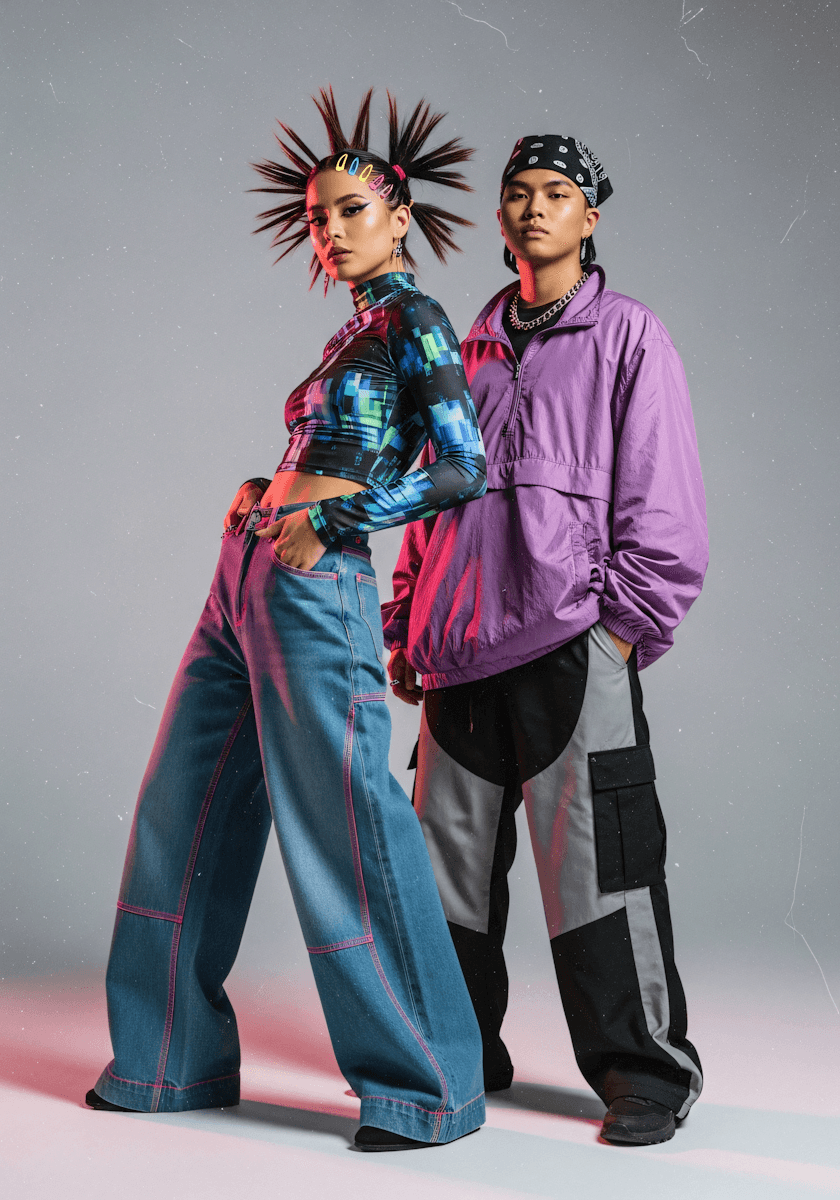
There is a noticeable shift happening across culture and branding. More and more consumers are gravitating toward 90s aesthetics, not as a retro trend, but as a reaction to how brands feel today. Overproduced. Overedited. Overoptimized. What people are responding to is not the decade itself, but what branding felt like then.
When Brands Felt More Alive
In the 90s, brands felt closer to the people who made them. Design carried fingerprints. Typography was expressive. Photography felt documentary rather than staged. Imperfections were visible and that visibility created trust. What you saw felt closer to how it was made.
Today, brands are often built through templates, prompts, and automated systems designed to scale consistency. The result is polish without presence. Everything looks clean, but little feels alive.
The Data Behind Authenticity
Consumer research consistently shows that authenticity is one of the strongest drivers of trust. Nielsen studies indicate that consumers, especially Millennials and Gen Z, are more likely to engage with brands they perceive as honest and human rather than highly curated. Additional behavioral research shows that people are more likely to remember and trust experiences that show signs of human effort and intention.
When something feels too perfect, the brain assumes it was produced by a system. Emotional distance follows.
Why Imperfection Builds Connection
The human brain responds to irregularity. Slight inconsistencies signal care, authorship, and presence. This is why rough edges often feel more trustworthy than flawless execution. In the 90s, brands did not try to smooth every edge because the tools did not allow it. What emerged instead was character.
Today, AI makes it easy to generate something fast, clean, and correct. Correctness, however, rarely creates attachment. When everything is equally polished, nothing stands out.
The Risk of Overreliance on AI
AI is not the problem. Absence of human intention is. When brands rely too heavily on prompts and automation, they lose their voice. People can sense when something was generated versus lived. Overuse of AI leads to content that feels efficient but hollow.
The brands that resonate now use AI as support, not authorship. They let human judgment, taste, and imperfection lead.
How Brands Can Reconnect With Their Audience
Reconnection does not mean copying vintage visuals or pretending it is 1997. It means reclaiming the values that made brands feel human.
Brands can start by loosening control. Allow more rawness in photography. Let language sound like a person, not a brand document. Show process, not just outcomes. Reduce effects. Leave space for texture, silence, and honesty.
Presence Over Polish
Consumers are not craving the past. They are craving presence. The appeal of the 90s is a reminder of a time when brands felt closer, more direct, and less mediated by systems. The opportunity today is not to polish harder, but to show up more honestly.
Continue Reading
Explore ideas, trends, and behind-the-scenes stories from our studio.