Payball
Payments Built for the Game
Project info
Deliverables
Branding, Web Design, Product Design, UX/UI, Product Development, API Integrations
Category
Sports
Results
The product launched successfully, reduced critical workflows to seconds, was privately acquired in 2023, and gave our team deep expertise in financial systems and complex payment flows.
Timeline
22 Weeks
The Overview
Payball started with a very specific problem that most payment platforms were not designed to solve. Minor league and varsity sports teams across the country needed a reliable way to pay coaches and staff. Not once, but repeatedly. Not directly, but conditionally. Not casually, but in a way that reflected how teams actually operate.
Founded by Peter Makeover, Payball set out to become more than a payment app. It was designed as an administrative platform for sports organizations. A place where teams could be created, staff could be managed, and payouts could be released only when conditions were met. Games played. Seasons completed. Budgets approved.
In 2019, Payball reached out to us to help shape the product and experience. What initially appeared to be a payments interface quickly revealed itself to be a much deeper systems problem involving trust, compliance, workflows, and financial infrastructure.
Métisse was brought in to help design a product that could handle that complexity while remaining fast, intuitive, and human.

The process
The Challenge
Most payment platforms assume a simple structure. One person sends money directly to another. That model breaks down immediately in organized sports.
Payball needed a different flow. A holds money. B earns money. C decides when money is released.
This required a three party payment structure where the platform itself acted as a holding entity. Payments had to be delayed, approved, and distributed correctly. The experience had to feel instant, even when the underlying logic was anything but simple.
The challenges were not cosmetic. They were structural.
Conditional payouts instead of direct transfers
Team based hierarchies instead of individual accounts
Administrators instead of casual users
Compliance with KYC requirements across multiple payment providers
Handling onboarding without friction
Maintaining trust while abstracting financial complexity
If this failed, the founders risked losing accounts, revenue, and credibility in a space built entirely on trust.
Discovery
Early discovery made one thing clear. Trying to force this complexity into a mobile only experience would not work.
Team administrators needed space. They needed visibility. They needed control. They needed a way to see rosters, schedules, payout logic, and compliance status all at once.
At the same time, coaches and staff did not want complexity. They wanted to get paid quickly and reliably.
This led to a fundamental insight.
Administration belongs on the web.
Payments belong on mobile.
Once this became clear, the product architecture began to take shape.
The Breakthrough
The breakthrough was the decision to split responsibility across platforms.
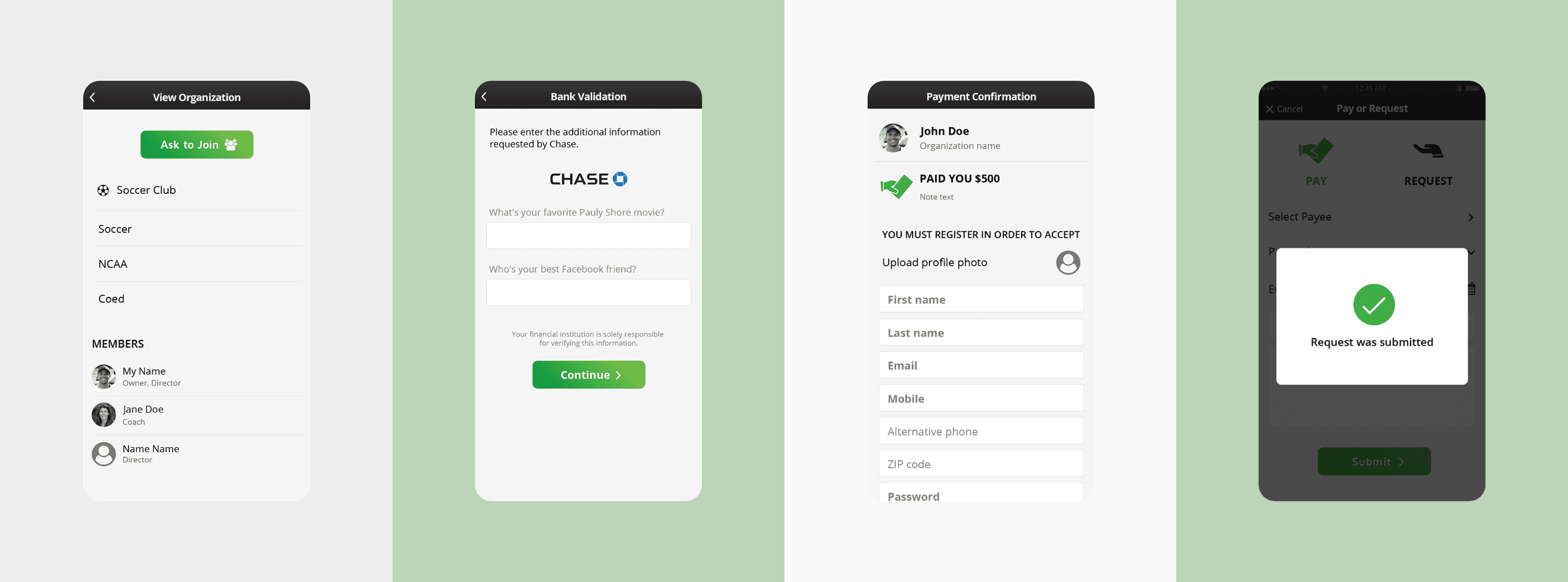
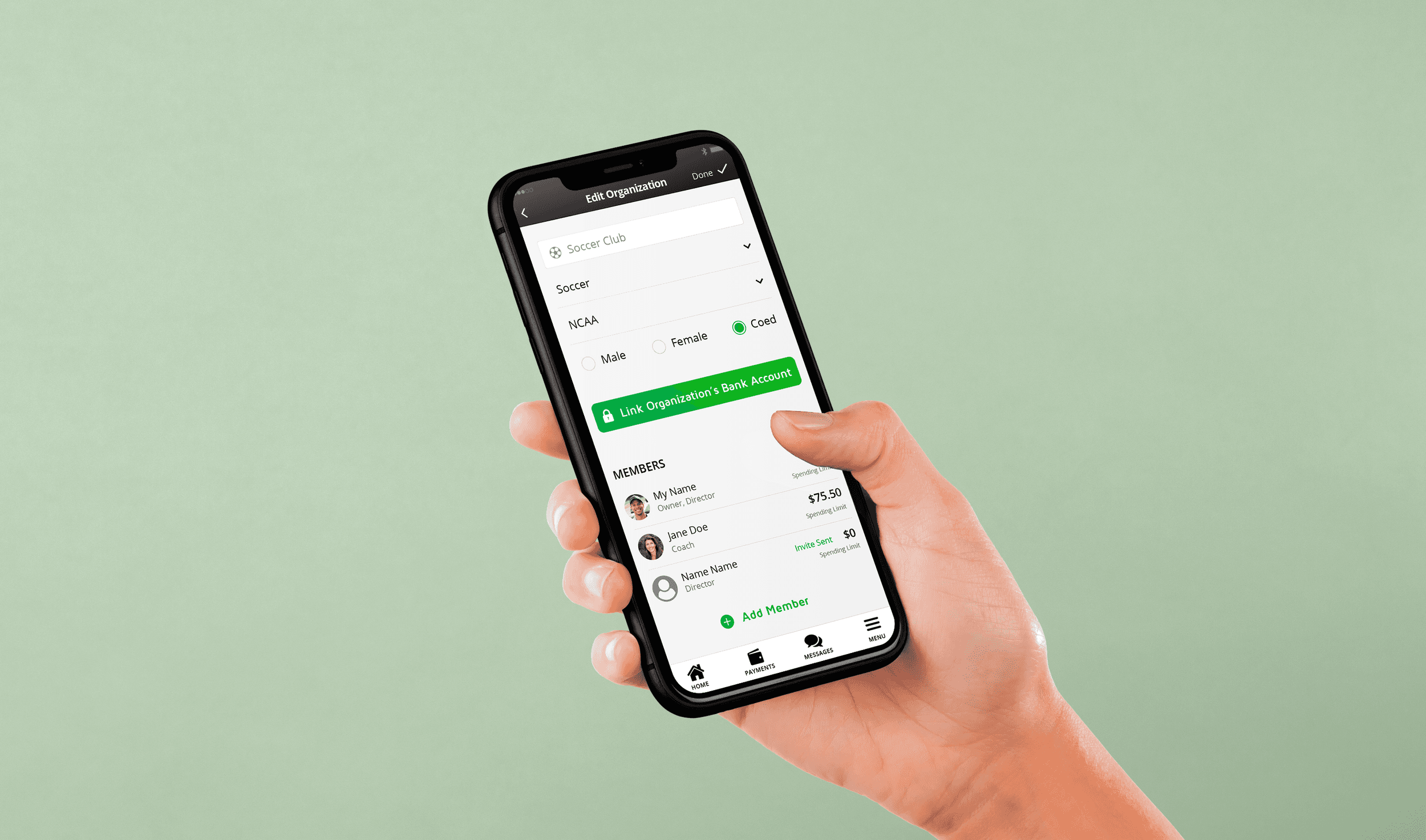
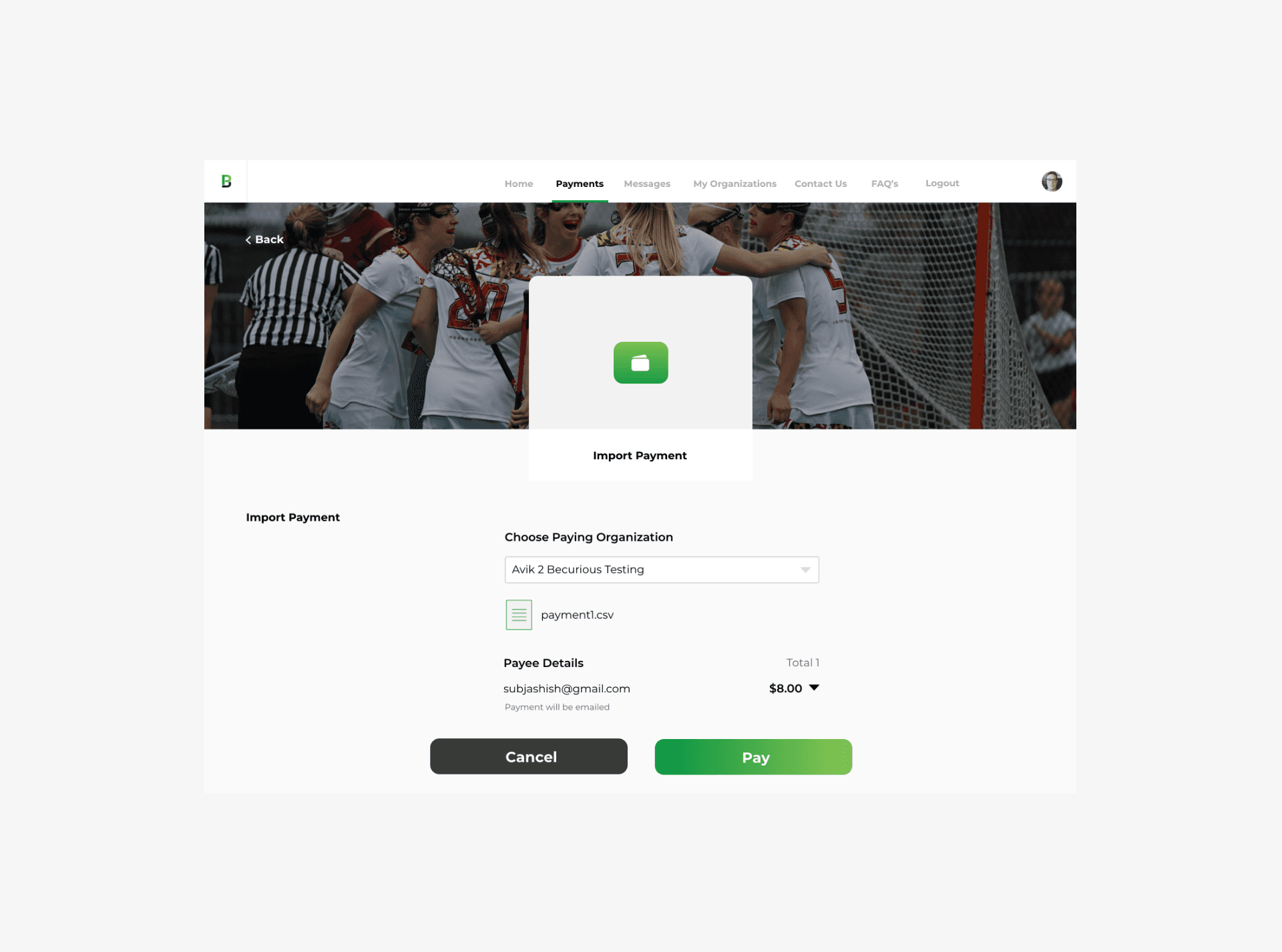
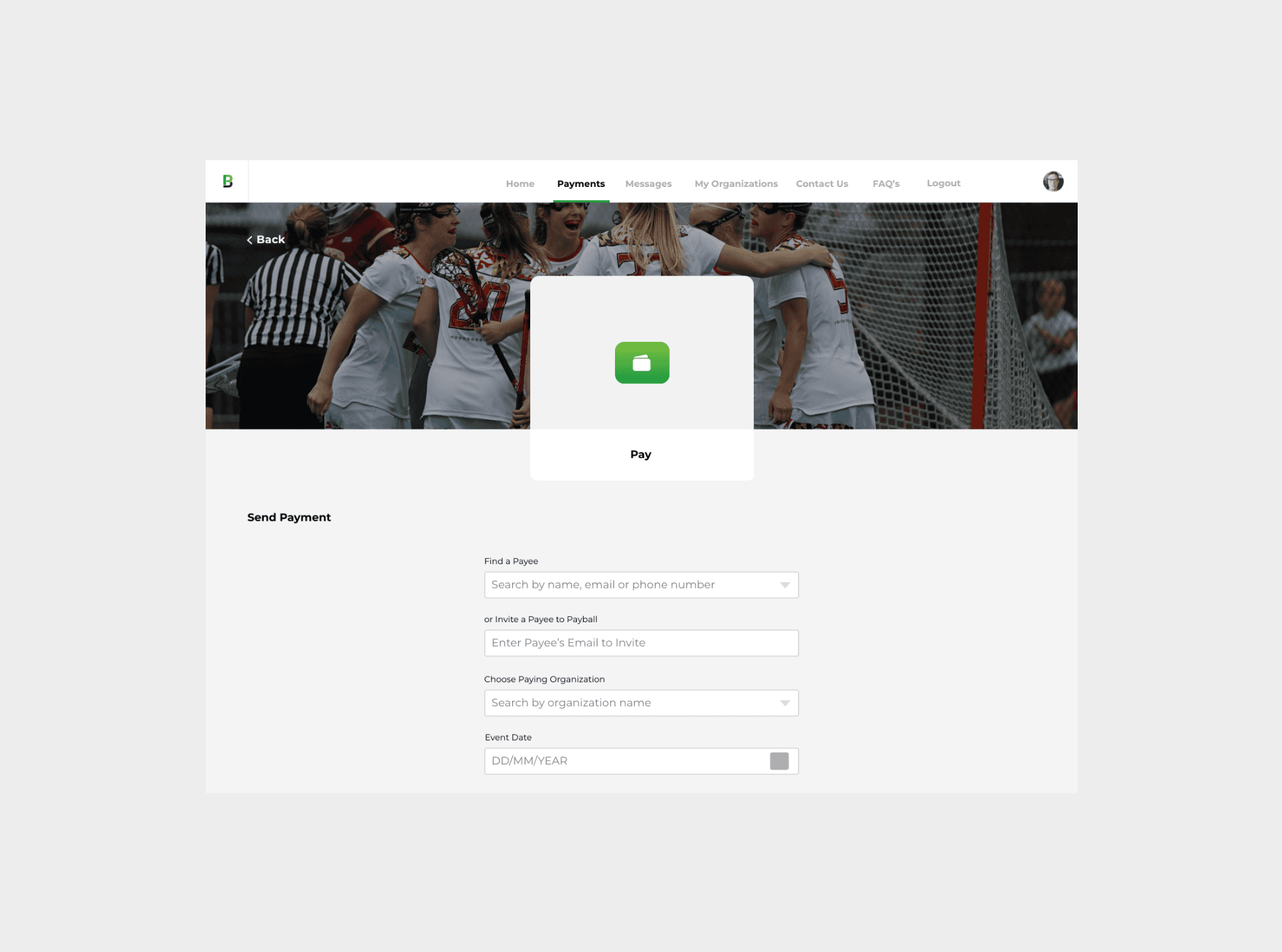
The web application became the administrative core. This is where teams were created, members were added, seasons were managed, and payout rules were defined.
The mobile experience became the execution layer. This is where payouts happened quickly, clearly, and with minimal friction.
This separation allowed each interface to do what it does best. It also dramatically reduced cognitive load for every user type involved.
Product Architecture and Technical Execution
Platforms
We designed a unified system spanning web, iOS, and Android. The experience was consistent across platforms, but responsibilities were clearly divided.
Web application for team and payout management
Mobile applications for fast and simple payouts
Payments and Integrations
The most complex aspect of the project was working with multiple financial institutions. Stripe, PayPal, and Clover were evaluated. Ultimately, WePay was selected due to its flexibility and API structure.
We integrated Stripe and WePay to support:
Conditional payouts
Platform held balances
KYC onboarding flows
Compliance with financial regulations
Secure handling of sensitive data
A major obstacle was passing KYC information cleanly between systems. This required careful orchestration of API calls and thoughtful UX decisions to prevent users from feeling blocked or confused.
Core Features
Team creation and management
Staff onboarding and role assignment
Season based payout logic
Administrative dashboards
Rapid payout execution
Secure authentication and compliance flows
During testing, users were able to create a team and complete a payout in under twenty seconds. That speed became one of the platform’s defining advantages.
User Experience Design
Designing trust into a financial product requires restraint.
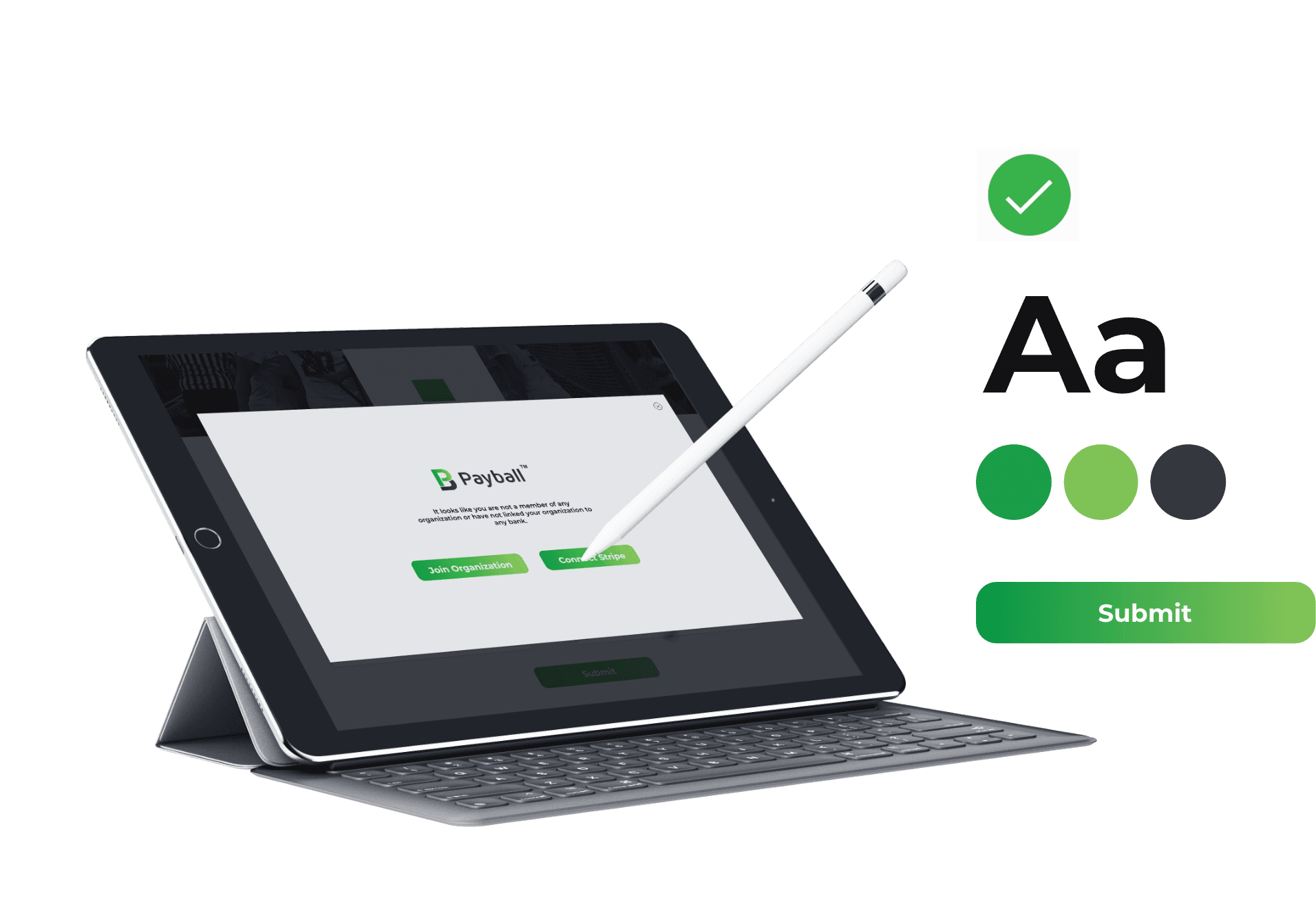
We avoided unnecessary playfulness where credibility mattered. Instead, we clearly communicated reliance on established payment partners like Stripe and WePay for security and compliance. Payball focused on what it owned best. Game management. Team workflows. Administrative clarity.
The interface prioritized:
Clear hierarchy
Fast onboarding
Minimal steps
Explicit feedback during payouts
Predictable outcomes
This was not a consumer toy. It was infrastructure for real organizations.
Results
User response during testing was overwhelmingly positive. Team administrators immediately felt relief. Tasks that previously required manual work or delayed payments could now be completed in seconds.
Payball successfully launched and was later privately sold in 2023.
Beyond the outcome of the company itself, the project had a lasting impact on our team. It gave us deep hands on experience working with financial institutions, compliance constraints, and complex payment flows. It sharpened our understanding of how money actually moves behind the interface.
Legacy
Payball proved that niche products often require deeper thinking than broad platforms. By focusing on a specific use case, sports team payments, the product avoided the traps of generic fintech.
It showed that good product design is often about choosing where complexity lives. Not eliminating it, but placing it where it belongs.
For the users, Payball turned a painful administrative task into a near invisible one.
Why This Project Matters to Métisse
This project came at an important moment for our team. At the time, we were operating as BeCurious Studio, before the evolution into Métisse. Payball pushed us into unfamiliar territory. Financial systems. Compliance. Multi platform product architecture.
It forced us to grow.
Payball taught us that design does not stop at screens. It extends into systems, regulations, and human behavior. That lesson continues to shape how we approach product work today.